Storage becomes useful when every location tells a story.
Inventory visibility is more than a balance on a screen. We want each pallet, carton and exception to have a known location, condition, ownership state and next action.
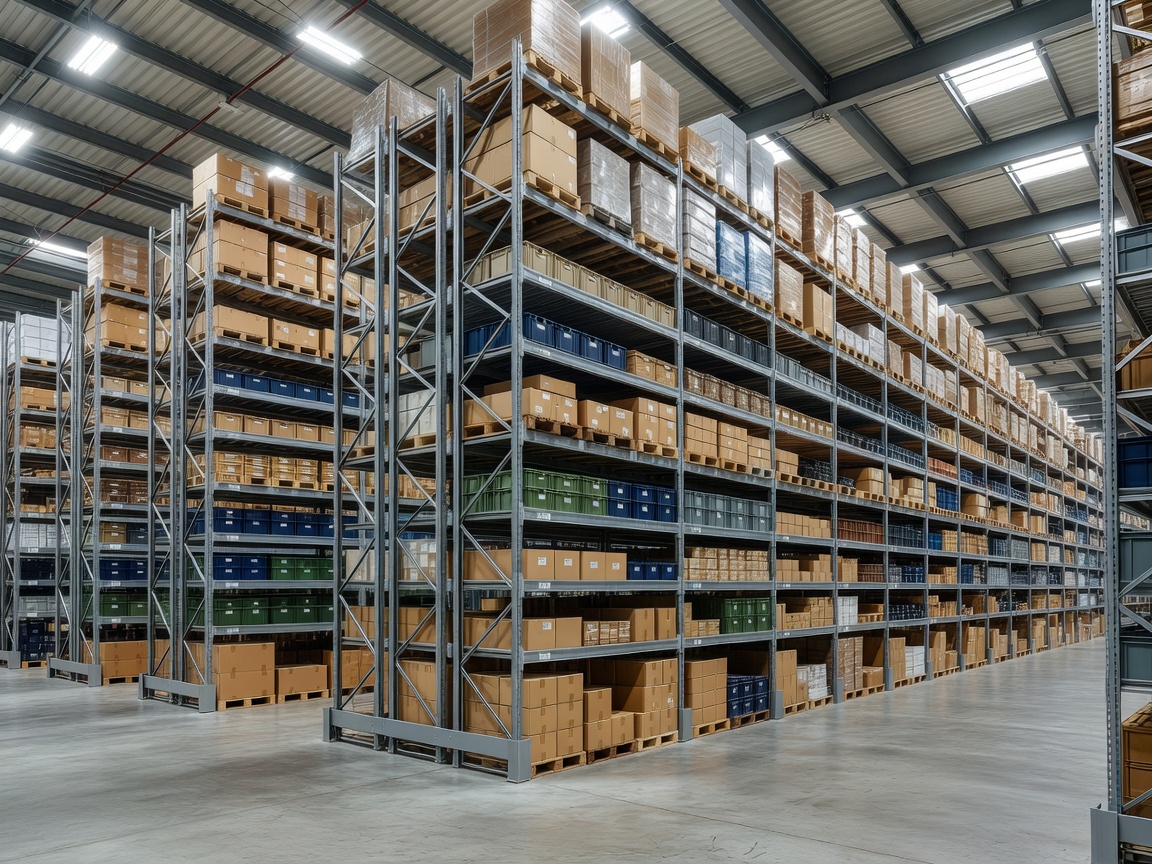
Distribution stock often changes status several times before delivery. It may be expected, received, inspected, available, allocated, picked, staged, held, returned or damaged. If the system records only quantity, the floor team still has to answer where the goods are and whether they can move. A useful inventory model connects quantity with identity and status.
Define the inventory object
Decide what must be tracked together. A pallet may need a unique handling-unit label; a carton may need a batch or serial reference; a return may need a reason and inspection state. The right level depends on product risk, customer requirements, value and the consequences of a mismatch. Tracking everything at maximum detail can burden operations, while tracking too little creates reconciliation work later.
A practical location record includes:
- Building, zone, aisle, bay and level.
- Handling-unit or product reference.
- Quantity and unit of measure.
- Availability, hold or quality status.
- Arrival, movement and last-count information.
Organize locations around movement
Storage zones should make the next task easier. Reserve stock, active pick faces, inbound inspection, returns and dispatch staging each have different rules. Clear boundaries prevent a pallet awaiting a decision from being mistaken for available stock. Location labels should follow one convention and remain readable in low light and busy aisles.
Slotting decisions can consider movement frequency, cube, weight, compatibility, replenishment effort and dispatch sequence. Heavy goods may need lower positions; irregular goods may require adaptable space; fast-moving products need access without blocking receiving. Seasonal changes may justify temporary forward locations, provided the system and floor signs change together.
Use cycle counts as a learning loop
Periodic full counts have their place, but targeted cycle counts can reveal problems sooner. Prioritize locations with repeated discrepancies, recent movement, high-value stock or frequent partial picks. When a count differs, record the cause rather than merely correcting the balance. Common causes include unrecorded relocation, unit-of-measure confusion, damaged packaging, mixed pallets or an incomplete dispatch scan.
Choose visibility technology carefully
Barcode scanning can provide strong control when labels, scan points and exception procedures are consistent. RFID or other automated methods may suit environments where line-of-sight scanning is difficult, but they bring setup, tag and reader considerations. A technology choice should be evaluated against the actual process: who scans, when, what happens if a label fails and how the record is reconciled.
Storage review checklist
- Can the floor distinguish available, held, returned and damaged stock?
- Does every movement have a responsible scan or record?
- Are unit conversions explicit rather than assumed?
- Do stock counts investigate causes?
- Can dispatch see allocated inventory before building the load?
Good storage is a shared language between inventory, warehouse and transport planning. To connect availability to the loading sequence, continue to dispatch and delivery planning, or review warehouse operations.